Personal data
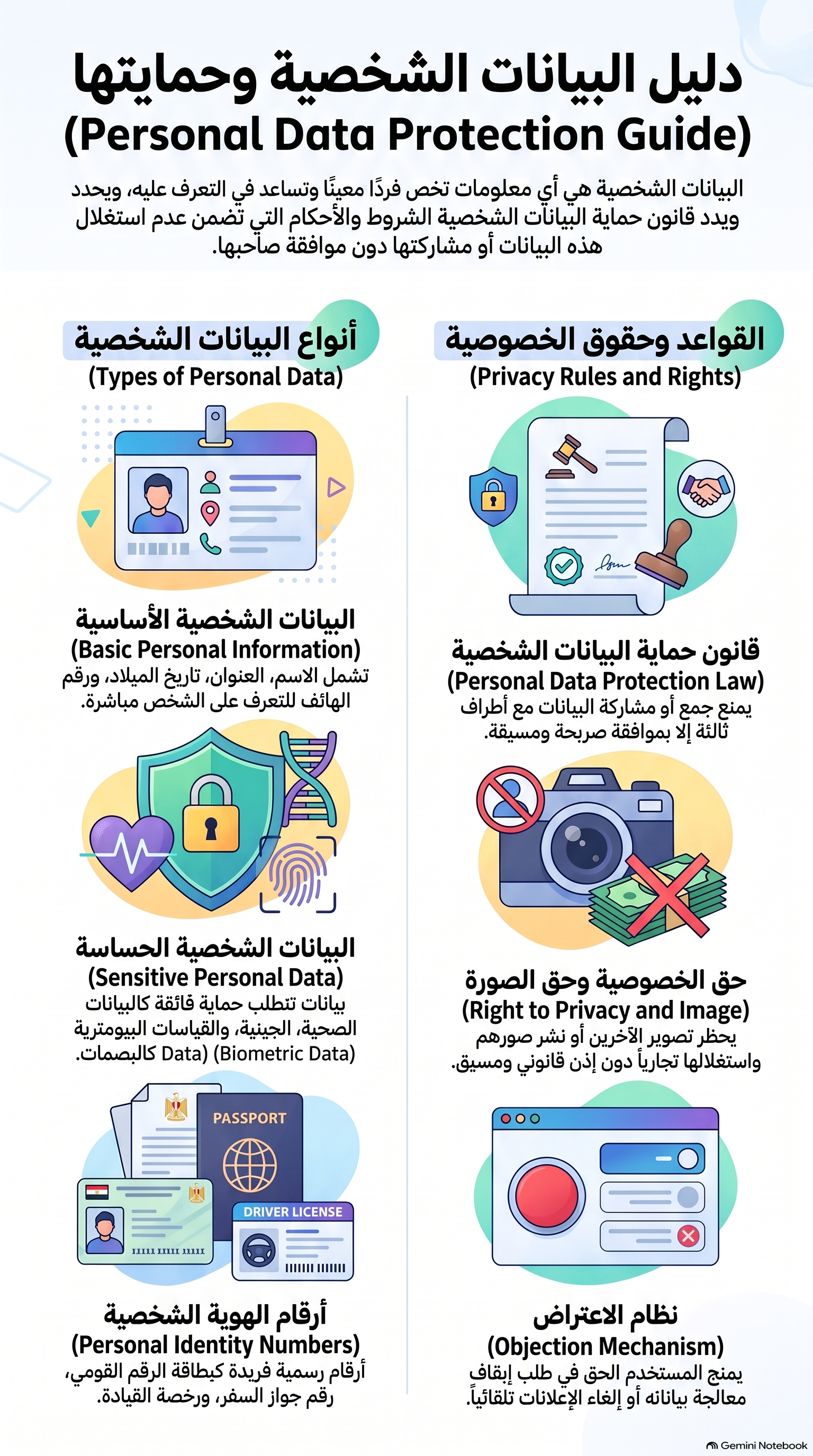
Any information about a specific person who can be identified directly, or by linking it with other information: name, address, date of birth, gender, ID numbers, phone number and email.
Page 21
Unit 2 · Lesson 1
7 steps. Each one is a short story and a question to answer.
Omar installed a new app, and the first thing it asked was to enter his details. He is about to type facts about himself.
His name, phone number, email and ID number are all personal data: any information about one specific person that can tell you who they are.
Even a detail that does not point to anyone alone, like a birth date, becomes personal data once it is linked to another, like an address.
Every field Omar fills goes to the company behind the app. That is why you should know what your data is before handing it to anyone.
Which of these is personal data?
Pick an answer
Any information about a specific person who can be identified directly, or by linking it with other information: name, address, date of birth, gender, ID numbers, phone number and email.
It includes health information (mental and physical), genetic data, and biometric data: fingerprint, face, iris and voice.
It sets the rules for collecting, processing, storing and transferring data to protect your privacy. No one may collect your data or share it with others without your explicit consent.
Five cases only: when the law requires it for a government request, to protect national security, to protect a person's life or health (like medical information in an emergency), to carry out a court ruling, or to carry out a contract (like a shipping company delivering your order).
Privacy is a constitutional right that protects your secrets, correspondence and conversations. The right to your image means nobody may photograph you or use your image without your permission, and everyone shown in a photo must agree before it is published.
Explicit consent must come before data is collected, not after. For example, signing up to a website shows a message asking for your consent. Under an objection system, the service continues until you object or press unsubscribe.
A privacy policy explains how a company collects, uses, stores and protects your data. Companies get a licence from the Personal Data Protection Centre to show they follow the law.
Scroll down ↓ to continue
Unit 2
Learn what personal and sensitive data are, the data protection law, privacy and image rights, and privacy policies, in a 3D explainer from the first-secondary book.
The same explanation as the 3D scene, written out for quick review.
Any information about a specific person who can be identified directly, or by linking it with other information: name, address, date of birth, gender, ID numbers, phone number and email.
Page 21
It includes health information (mental and physical), genetic data, and biometric data: fingerprint, face, iris and voice.
Page 21
It sets the rules for collecting, processing, storing and transferring data to protect your privacy. No one may collect your data or share it with others without your explicit consent.
Page 21, 22
Five cases only: when the law requires it for a government request, to protect national security, to protect a person's life or health (like medical information in an emergency), to carry out a court ruling, or to carry out a contract (like a shipping company delivering your order).
Page 22
Privacy is a constitutional right that protects your secrets, correspondence and conversations. The right to your image means nobody may photograph you or use your image without your permission, and everyone shown in a photo must agree before it is published.
Page 22
Explicit consent must come before data is collected, not after. For example, signing up to a website shows a message asking for your consent. Under an objection system, the service continues until you object or press unsubscribe.
Page 24
A privacy policy explains how a company collects, uses, stores and protects your data. Companies get a licence from the Personal Data Protection Centre to show they follow the law.
Page 28