Information ethics: values that guide you
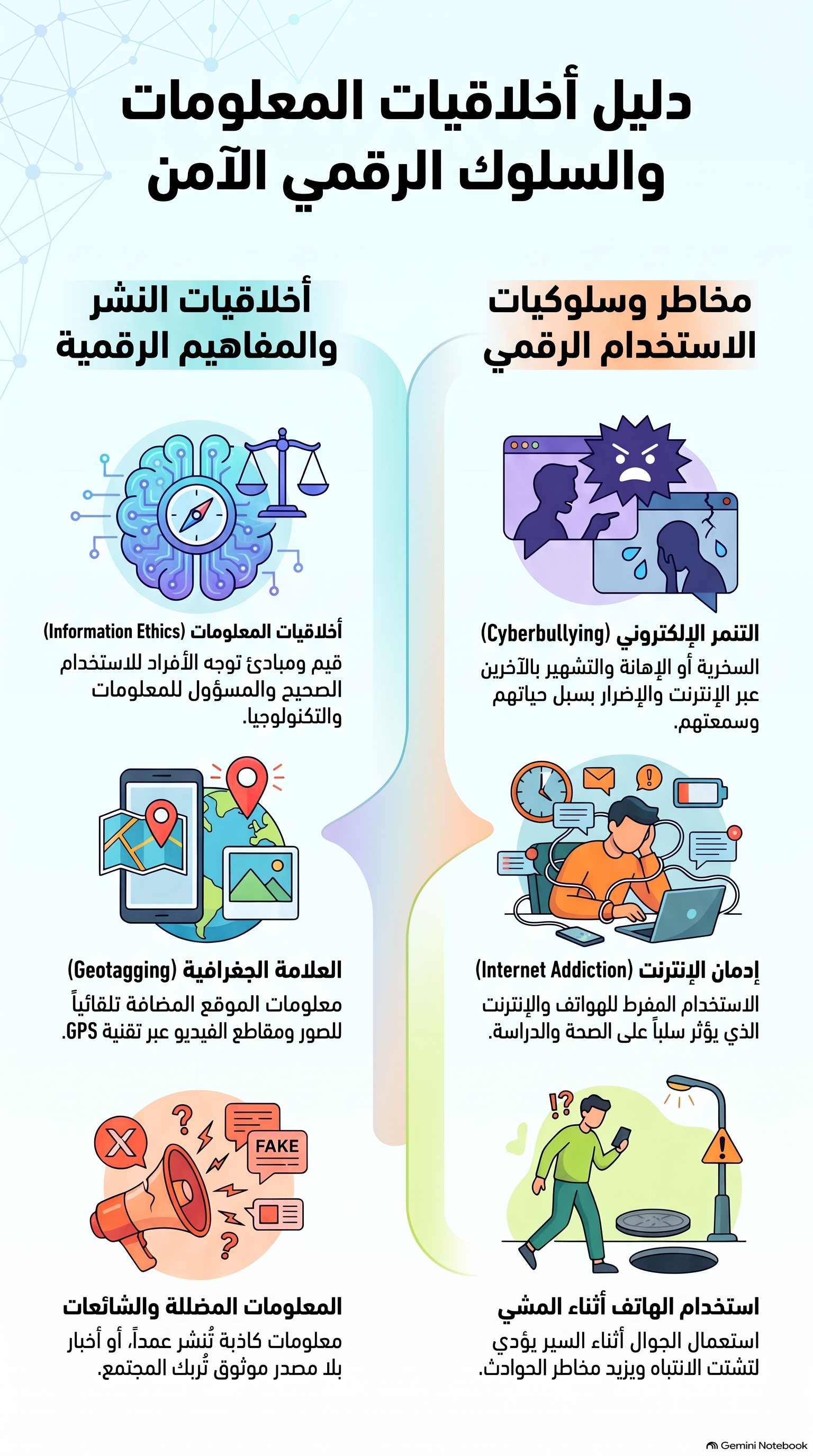
It is a set of core values and guidelines that lead people to use information and technology correctly and responsibly, whether or not laws regulate it.
Page 12
Unit 1 · Lesson 2
6 steps. Each one is a short story and a question to answer.
Omar found an embarrassing photo of his friend on his phone. Post it? No clear law stops him, but something feels wrong.
This is where information ethics comes in: a set of core values and guidelines.
They guide people to use information and technology correctly and responsibly.
They apply even when no law covers the situation. Ethics tells you what to do.
Information ethics applies...
Pick an answer
It is a set of core values and guidelines that lead people to use information and technology correctly and responsibly, whether or not laws regulate it.
Do not share other people's photos or videos without permission, do not leak their personal data like a phone number or address, and avoid bullying and defamation.
It is defaming, mocking, insulting or harassing people online. You must not post comments or messages that hurt others or damage their reputation.
When you take a photo with location services on, the coordinates are saved inside the photo file itself. When you share it, others may find your home or school.
Disinformation is false information spread on purpose. Rumors are baseless news that spreads without a trusted source. They aim to deceive people, sway opinions or frighten them.
Internet addiction is excessive use that harms your studies, health and daily life. Using your phone while walking also distracts you and raises the risk of accidents.
Scroll down ↓ to continue
Every idea in the lesson with its rule, ready to screenshot and revise from.
Information ethics = values that guide the correct and responsible use of information and technology
Ask before sharing, never leak someone's data, and avoid bullying
Cyberbullying = defaming, mocking, insulting or harassing someone online
A geotag = the photo's location is saved inside it and can reveal your home or school
Disinformation = false and spread on purpose. Rumor = baseless, with no source
Excess use harms studies, health and daily life, and raises accident risk
One question from every step. Answer and see your score.
Question 1 of 6
Information ethics applies...
Unit 1
Learn what information ethics means: cyberbullying, geotagging, rumors and disinformation, and internet addiction, in a 3D explainer from the first-secondary book.
The same explanation as the 3D scene, written out for quick review.
It is a set of core values and guidelines that lead people to use information and technology correctly and responsibly, whether or not laws regulate it.
Page 12
Do not share other people's photos or videos without permission, do not leak their personal data like a phone number or address, and avoid bullying and defamation.
Page 12
It is defaming, mocking, insulting or harassing people online. You must not post comments or messages that hurt others or damage their reputation.
Page 12
When you take a photo with location services on, the coordinates are saved inside the photo file itself. When you share it, others may find your home or school.
Page 12, 13
Disinformation is false information spread on purpose. Rumors are baseless news that spreads without a trusted source. They aim to deceive people, sway opinions or frighten them.
Page 13
Internet addiction is excessive use that harms your studies, health and daily life. Using your phone while walking also distracts you and raises the risk of accidents.
Page 13